The smell of fresh bread built your brand.Systems
behind it will determine if it lasts.
Baking is a craft. Scaling a bakery is an operational discipline. Every loaf you couldn’t produce because the schedule was wrong, every write-off you couldn’t explain, every regular you lost because your loyalty programme forgot them — these are not bad luck. They are solvable problems that compound silently until they aren’t.
A perspective for bakery operators building for the long term
Six ingredients every great bakery business needs — and why most run short at scale.
There is no secret to running a great bakery at one location. At ten, twenty, fifty — the craft does not change. The management challenge does. Every one of these six ingredients scales on its own clock, its own logic, and its own failure mode. When any one runs short, the whole batch suffers.
“Growth does not expose weakness in the product. It exposes weakness in the system that produces it.”
Running a bakery at scale is harder than it looks from the outside.
Speak with someone who has worked alongside bakery operators from the second location to the two hundredth.
Five places every growing bakery silently bleeds
Not dramatic failures. Not one big mistake. Five operational domains where margin and momentum drain away slowly — and most operators only measure the damage when the P&L arrives.
The production clock runs before your guests do
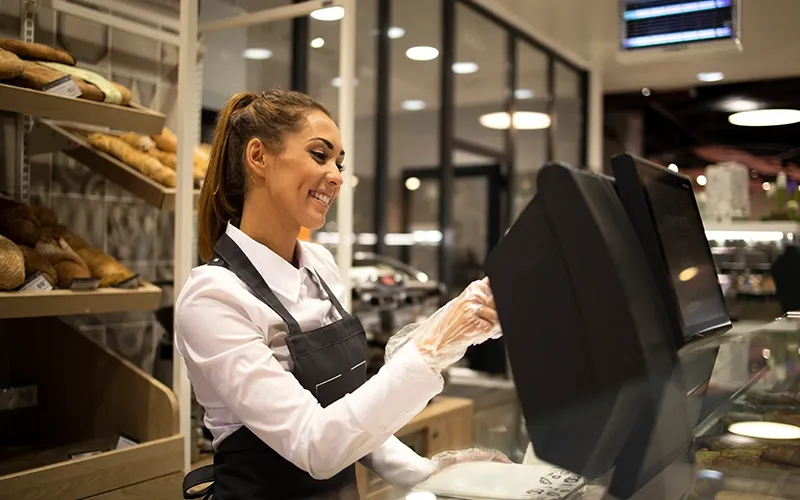
A restaurant’s kitchen starts when the first order comes in. A bakery’s kitchen starts at 3am, making decisions based on yesterday’s patterns and today’s instinct. Every new location you add is another production operation running on that same fragile logic — without a single view of what the estate actually needs.
- Production schedules built per-site with no visibility into estate-wide demand signals or advance order volumes
- Oven scheduling conflicts surfaced at 4am when nothing can be done — not the night before when they could be fixed
- Recipe deviations invisible until a guest complaint arrives, by which point the batch is sold and the damage is done
- Seasonal items and promotional lines launched through group chats — no structured rollout process, no consistent execution
- Staff knowledge locked in people, not systems — every departure takes production intelligence with it
Every unsold item is a margin entry that nobody booked
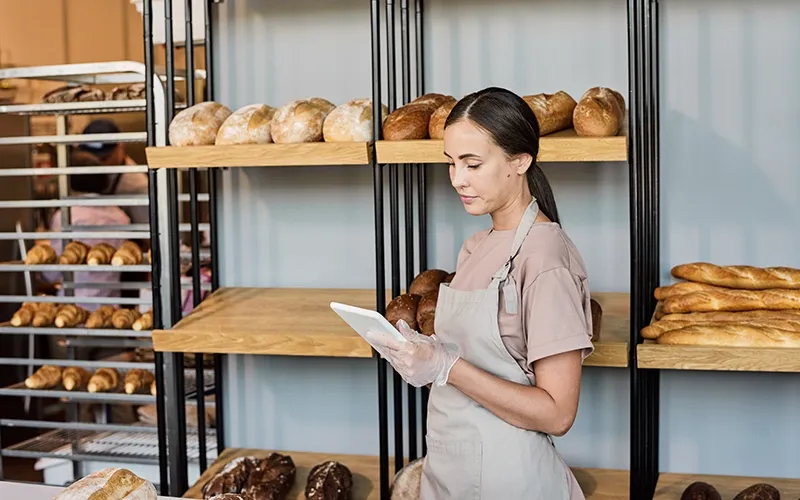
In a restaurant, an unused ingredient can survive until tomorrow. In a bakery, yesterday’s dough is today’s write-off. The production decision made twelve hours ago determines today’s waste — and at scale, the compounding effect of systematic over-ordering or under-selling becomes one of the most significant, least-measured costs in the business.
- Purchasing decisions made without real-time sell-through data — orders placed on instinct and last week’s general pattern
- End-of-day write-offs not systematically recorded — the same estimation errors repeat indefinitely across every site
- No visibility into ingredient cost variance across suppliers and regions — margin differences accumulate undetected at the line level
- Perishable spoilage treated as a fixed operational cost rather than a measurable, improvable variable
- Reorder triggers manual and reactive — the ingredient shortage discovered at 5am cannot be fixed until the next delivery
Your pricing is static. Your product is not.
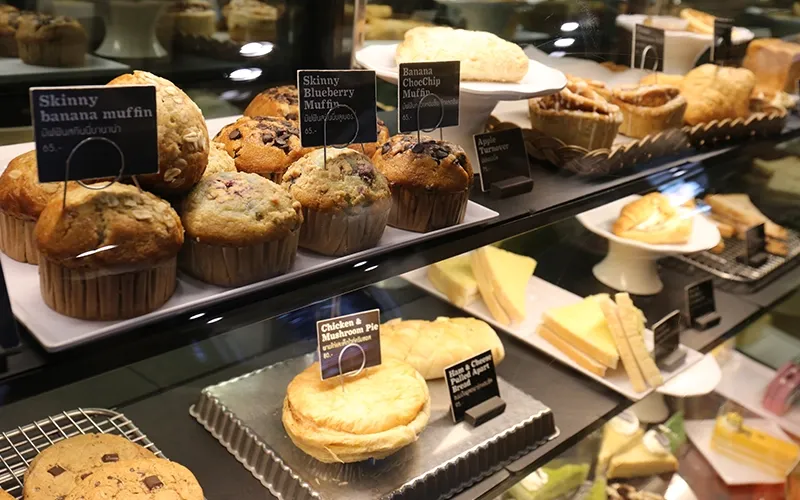
A bakery’s product has a value that changes by the hour. Peak-morning premium pricing, midday holds, end-of-day markdown — each is a rational commercial decision that most growing operators never implement because there is no mechanism to apply it consistently across every location and every channel simultaneously.
- Time-of-day pricing exists as an intention, not a system — discounts applied inconsistently, premium hours left unrealised
- Delivery platform menus manually managed and chronically out of sync with in-store pricing and availability
- Advance order pricing governed separately from regular menu pricing — no unified commercial logic applied across channels
- Limited-edition and seasonal items rolled out piecemeal, with no centralised mechanism ensuring consistent launch across the estate
- Loyalty tier discounts and promotions calculated by hand or simply not applied — the guest benefit exists on paper, not at the counter
Tonight’s production decision needs today’s data
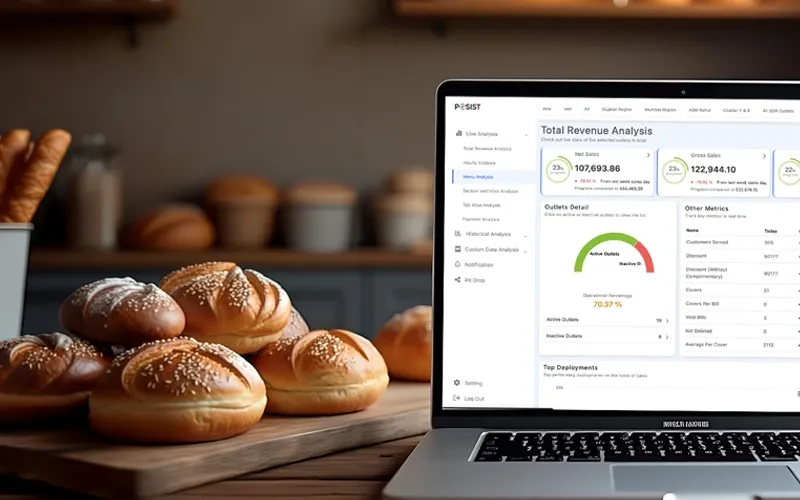
The decision that determines tomorrow’s revenue is made tonight. What gets baked, in what quantities, for which locations — all of it rests on data quality. When that data arrives three days late, sits in a POS export no one has time to analyse, or simply does not exist at the ingredient level, every production decision is partially blind.
- No live sell-through view by item and location — bestsellers and slow movers identified by observation, not measurement
- Production-versus-sales reconciliation done after the fact — waste and shortfalls visible too late to change the pattern
- Advance order pipeline invisible to production teams until the day before — capacity conflicts discovered under pressure
- Ingredient cost-to-sales ratio reviewed monthly, not daily — supplier price increases absorbed silently before anyone notices
- No site-versus-site benchmarking — underperformance in a location persists for months before head office registers the trend

The guest who comes every day deserves more than a stranger’s welcome
A bakery regular is one of the most commercially valuable guests in the food business — high frequency, predictable spend, low acquisition cost. Most bakeries have no system that recognises this. The same guest walks into a second location and starts from zero. That is not just a missed opportunity — it is a brand failure that happens invisibly, a hundred times a day.
- Loyalty programme siloed per-location — the guest who earned their tier at Site 1 is unrecognised at Site 3
- Tier benefits and member privileges applied inconsistently — the experience varies by site, by shift, by whichever staff member is at the counter
- Advance order intake has no standard process — guests at different locations receive different levels of communication, confirmation, and care
- No post-purchase follow-up mechanism — the custom cake collected is the end of the transaction, not the beginning of the next relationship
- Guest preferences and order history exist nowhere — every visit from a regular is treated as their first
Every leak in the bakery has a specific plug .
The problems above are not unsolvable. They are the predictable consequences of running a food manufacturing business on hospitality technology. Purpose-built infrastructure changes the physics of the problem — not incrementally, but structurally.
Production scheduled on instinct per site. No estate-wide demand view, no link to advance orders, no feedback loop from yesterday’s actual sales — leading to systematic over and under-production that nobody measures.
Demand-linked production scheduling connected to sell-through history, advance order pipelines, and seasonal patterns — every site’s bake plan driven by what the data says, not what the head baker remembers from last Tuesday.
Perishable write-offs never measured, never fixed. Waste logged by feel and forgotten. The same over-ordering pattern repeated every week at every site because no one has the data to change it.
Real-time item-level waste tracking with automated reorder triggers, cost-per-unit visibility, and daily ingredient margin reports — so the write-off that used to appear at month-end is visible and addressable before the next batch.
One price for a product whose value changes by the hour. No mechanism to run peak pricing at 7am, hold at midday, and markdown at 5pm — across all sites and all channels — without it being a full-time manual job.
A centralised dynamic pricing engine with time-of-day rules, channel-specific price lists, and promotional logic applied consistently across every site and every aggregator platform from a single control point.
Advance orders managed by memory and goodwill. No intake system, no deposit management, no production pipeline integration — the highest-margin category in the business run as a manual favour to loyal guests.
Structured advance order management — digital intake, deposit collection, automatic production scheduling integration, and guest communication from booking through to collection reminder. The highest-value category becomes the most systematically managed.
Loyalty that forgets who the guest is. Stamp cards at best, nothing at worst. No cross-location recognition, no tier management, no intelligence about what this guest actually buys and when they usually visit.
Tiered loyalty built for daily-visit frequency — points that follow guests across every site, tier benefits enforced at the counter, and personalised offers that respond to behaviour rather than just rewarding spend above a threshold.
Curious what your bakery’s margin leaks actually add up to?
We will walk through your specific setup — production model, location count, channels — and map exactly where the structural gaps are.
What separates bakeries that thrive at scale from those that merely survive it.
Close the loop between tonight’s data and tomorrow’s bake
The only production plan worth running is one connected to real data — yesterday’s sell-through by item, today’s advance order pipeline, tomorrow’s weather and local events. Bakeries that build this feedback loop early make better production decisions every morning, at every site, permanently. Those that don’t are improvising at 3am in perpetuity. Production intelligence is not a reporting function. It is a daily operational discipline that compounds over every morning you run it.
Audit your production data →
Measure waste at the item level, not the P&L level
Monthly write-offs are symptoms. Daily item-level waste is a signal. The bakeries that improve their margins over time are those that treat each unsold loaf as a measurement opportunity — recording what it was, why it was unsold, and adjusting the next morning’s production accordingly. This is not possible without the right tools and the discipline to use them. The difference between a 3% and 8% waste rate is almost entirely a measurement and feedback discipline, not a baking skill.
Benchmark your waste rate →
Price for the time, not just the product
Dynamic pricing in a bakery is not yield management in the hotel sense. It is a recognition that a perishable product has a declining value curve across the day — and that this curve can be used commercially rather than absorbed as waste. Peak-morning premium, midday hold, end-of-day clearance: each implemented systematically, each adding margin at scale. Every bakery operator knows they should be doing this. The ones who actually do it have the infrastructure to enforce it without manual intervention.
Map your pricing curve →
Turn custom orders from a cost centre into a growth engine
Custom cakes and corporate accounts are the highest-margin, highest-loyalty revenue a bakery can generate — and the most commonly mismanaged. Operators who formalise the intake, production planning, communication, and follow-up around these orders convert their most demanding category into their most predictable and profitable one. An advance order booked through a proper system is a guaranteed sale with production lead time built in. That is the best kind of revenue a bakery can have.
Systematise your advance orders →
Build loyalty for the morning regular, not the occasional visitor
Most loyalty systems are designed for restaurants where a guest visits twice a month and spends £40. A bakery’s most valuable guest visits four mornings a week and spends £6 each time. The economics are different. The loyalty logic must be different — high-frequency, low-per-visit, cross-location, with compounding benefits that reflect the cumulative value of the relationship rather than just today’s transaction. Loyalty infrastructure built for the daily visitor converts habit into relationship. The stamp card keeps count. The right system keeps the guest.
Design your loyalty tier →
For operators who think before they bake.
Bakery Management System Benefits: What Every Operator Should Know
How purpose-built bakery management platforms solve the production, inventory, and pricing challenges that generic POS systems were never designed for.
Read article →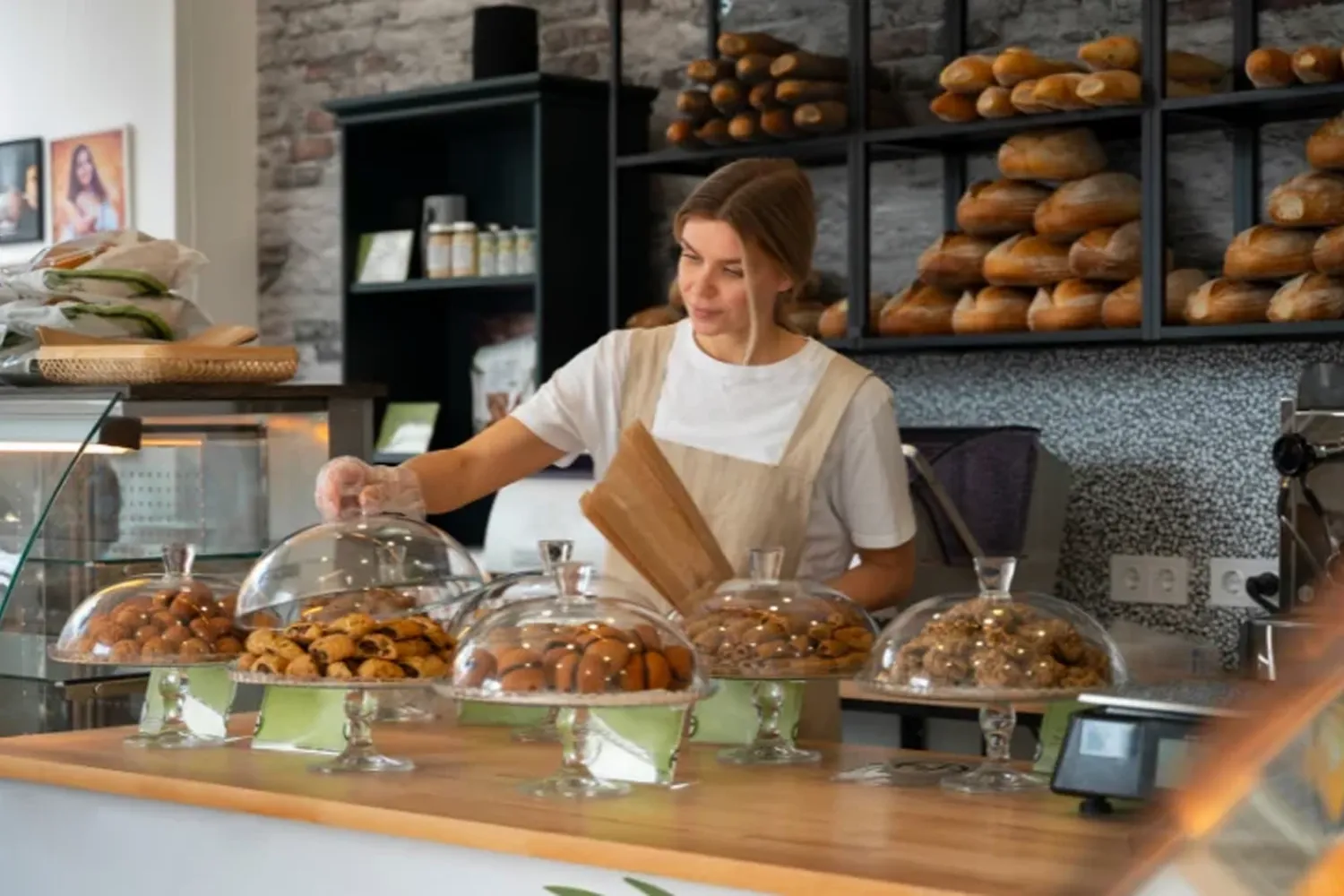
How to Build a Bakery Business Plan That Actually Scales
The financial and operational architecture that distinguishes bakery businesses designed for multi-site growth from those that plateau at three locations.
Read article →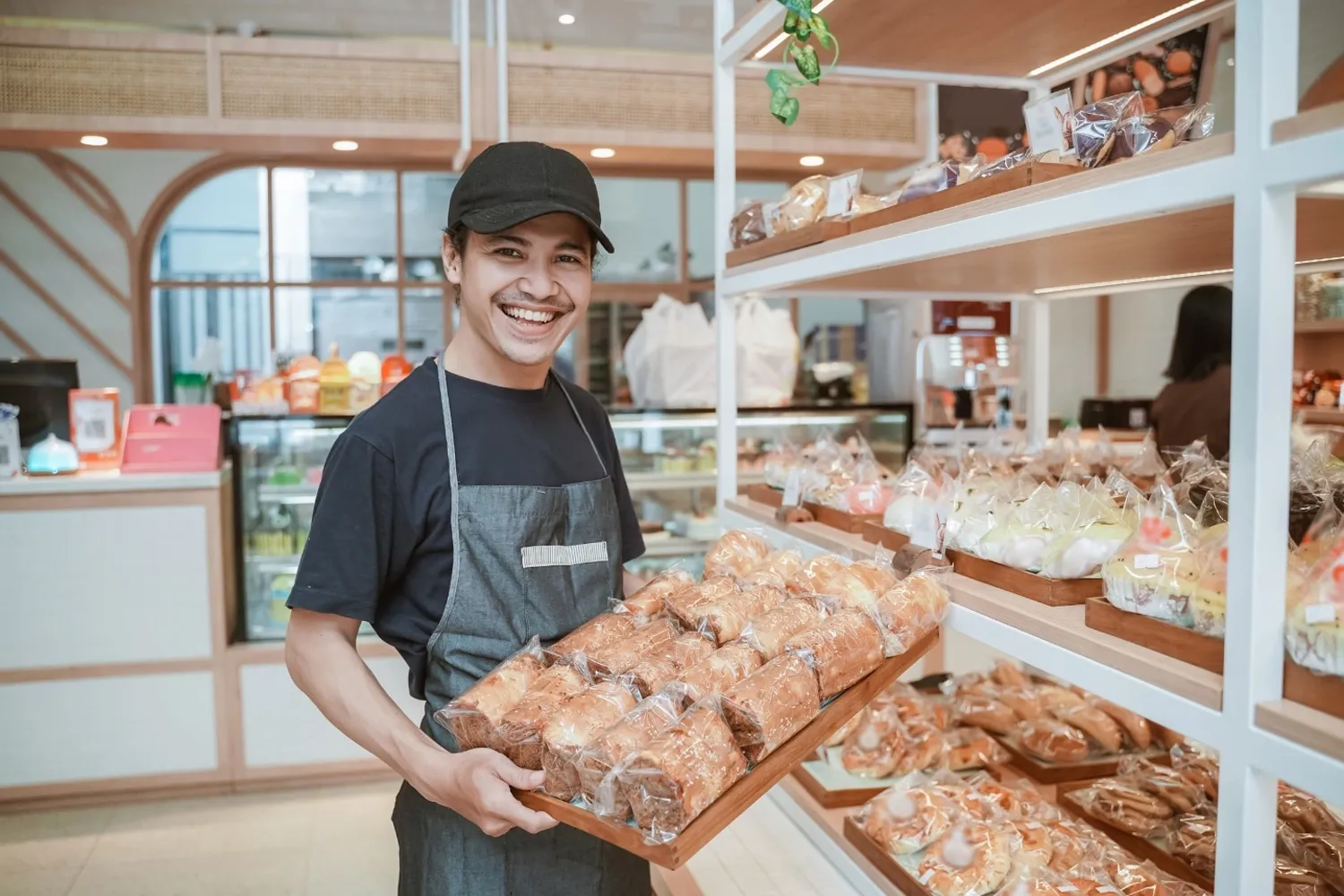
How to Increase Bakery Sales Without Changing What You Bake
Pricing strategies, product positioning, and loyalty mechanisms that grow revenue per guest visit — without adding a single new item to the menu.
Read article →Tell us about your bakery. We’ll be direct.
We will not walk you through a feature list. We will ask about your production model, your channel mix, your current waste rate, and how your loyalty programme actually works today. Then we’ll tell you honestly what the data suggests about where your biggest structural gaps are — and what operators at your scale have done to close them.
Trusted by 25,000+ restaurants across 50+ countries
















































 G2 Leader·4.8★
 Best Restaurant POS·Gartner Digital Markets
 Capterra·4.8★